
Switzerland has undergone a quiet revolution in investments. muula.ch asked the private bank Pictet to explain exactly what this entails.
For a long time, it had been an open secret in the Swiss financial market.
Anyone who wanted truly flexible structuring went to Luxembourg.
Strategic signal
There, fund vehicles emerged that were faster, more flexible, and more pragmatic than what Swiss law permitted.
Switzerland – proud of its financial tradition – watched on as more and more structuring volume migrated to Luxembourg.
With the Limited Qualified Investor Fund, or L-QIF for short, Switzerland finally came to its senses. Officially, it is just a new fund structure. In reality, it is a strategic signal.
Regulator away from products
The core of the model is as simple as it is politically sensitive: The fund itself is no longer authorized by the Swiss Financial Market Supervisory Authority (FINMA).
Instead, the service providers involved – the fund manager, custodian bank, and asset manager – remain regulated.
Supervision is not abolished in this way, but merely shifted. The regulator shifts its focus away from the product and toward the participants, as is also the case with the Luxembourg counterpart, the Raif.
Quick solutions required
What appears technical on paper has a significant impact in reality.
After all, anyone who serves professional investors such as pension funds or family offices knows that speed and flexibility are no trivial matters.
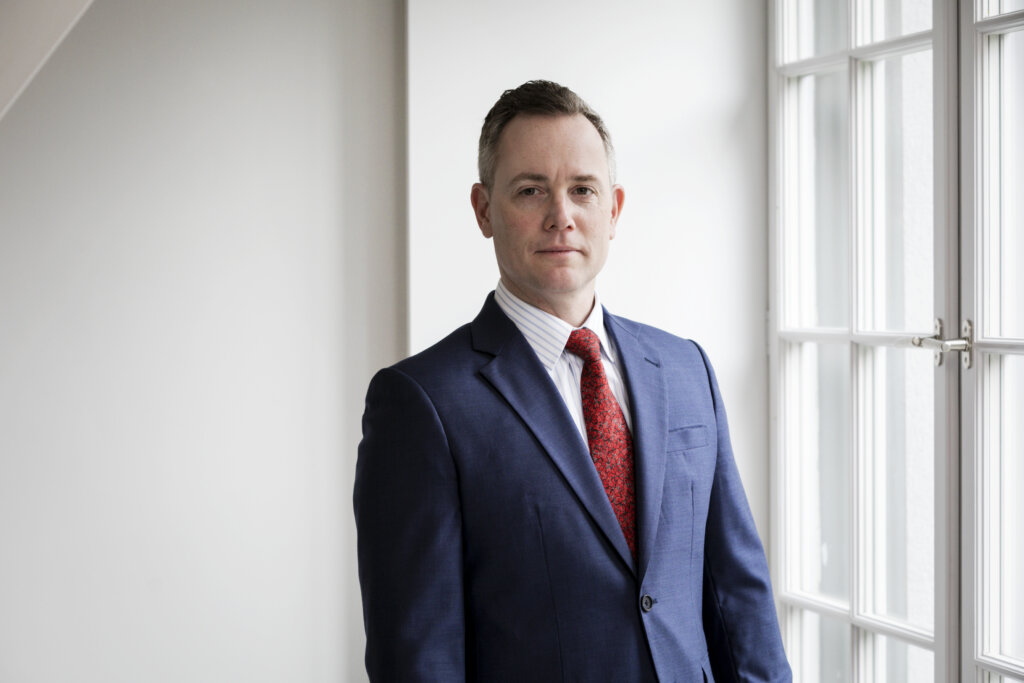
They determine whether a structure is feasible or not. muula.ch asked Reto Barbarits of Pictet Asset Services how these new opportunities have unfolded so far.
Hold Capital in Switzerland
The L-QIF is a smart form of deregulation, the expert emphasizes. The government is stepping back where professional market participants can take responsibility themselves, he says.
Even in a small country like Switzerland, approval processes take time, and innovative investment ideas quickly lose their relevance before they become investable.
With the L-QIF, the country is breaking this pattern and creating new freedoms for professional investors.
Switzerland is thereby retaining capital domestically once again, the Pictet Asset Services specialist went on to explain.
Over 8 billion in volume
Investors, in fact, seek proximity to their investments. In addition, many no longer trust the excessive regulation in the EU, the lawyer emphasized.
As many as 42 such structures have already been established in Switzerland, with an investment volume of over 8 billion Swiss francs.
The vehicle is even attractive for succession planning, according to the private bank Pictet.
Switzerland regain control
For the Swiss financial center, this is more than just a technical innovation.
Internationally, Switzerland has been competing for years with fund hubs such as Luxembourg, Ireland, and the Cayman Islands.
It was in danger of losing its appeal, particularly in the alternative investment sector. The L-QIF is a response to this – deliberately Swiss, yet globally compatible.
Luxury watches as fund
Illiquid assets, private markets, infrastructure, private debt, thematic specialty funds, and complex strategies can be structured much more easily with the L-QIF.
Institutional investors in particular – such as pension funds and family offices – benefit from these innovations.
While it is theoretically possible to use an L-QIF to package a collection of paintings or a selection of Swiss luxury watches into a fund vehicle, traditional asset classes, private assets, equity investments, or real estate portfolios – which become attractive to multiple investors – are far more compelling.
Limit innovations?
The L-QIF does not represent a major upheaval in the capital market and therefore did not attract much public attention.
However, it is an attempt to bring capital structures back to Switzerland to a greater extent and to provide the flexibility to shape them.
In fact, the L-QIF is a quiet but very Swiss response to a global question: How much regulation does a mature market need, and at what point does it begin to stifle innovation?
The answer isn’t loud, but it’s effective, as evidenced by the development of new investment opportunities.
24.07.2026/kut./ena; Interview: Rico Kutscher