

Switzerland is spinning fairy tales about the collapse of the bank Credit Suisse. That’s why the country is having a hard time accepting new regulations.
Why did the major bank Credit Suisse (CS) disappear?
Well, first there’s Switzerland’s official version, which reports poor management and then a ‘bank run’ were the main causes of the collapse of this systemically important financial institution.
Billions in Losses in the U.S.
This narrative is intended to ensure that Switzerland and its authorities do not have to face criticism for the collapse of the major bank.
The Swiss Financial Market Supervisory Authority (FINMA), in particular, is under pressure in this regard, as it is supposed to keep an eye on things in the Swiss financial center. With its hundreds of employees it is actually supposed prevent banking crises.
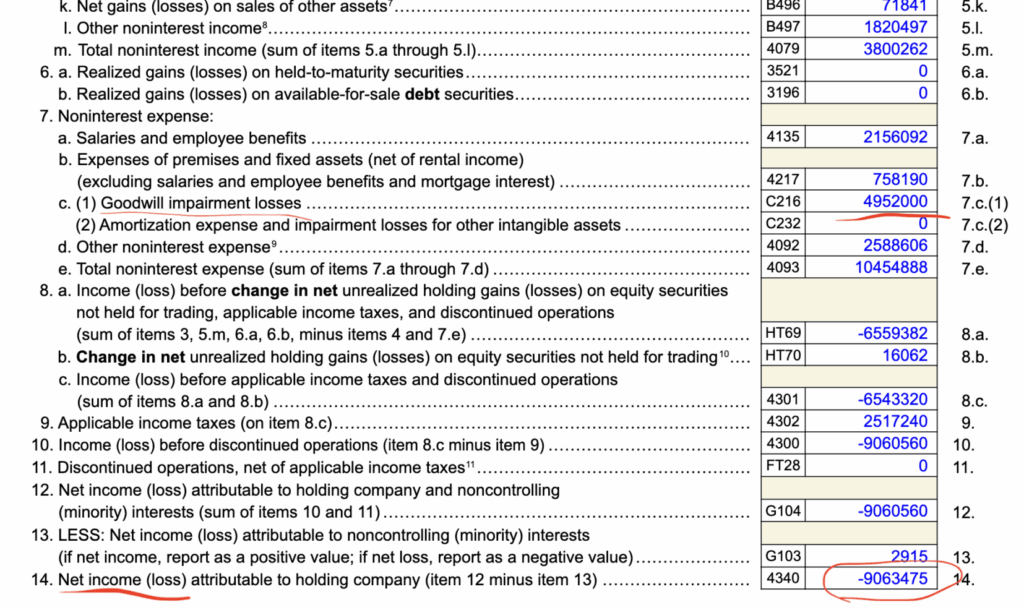
The true trigger for CS’s collapse, however, was a write-down in the billions at the CS subsidiary in the U.S.
This write-down, however, had no accounting impact at the corporate level, which is why it is incomprehensible to many – especially politicians and non-economists.
Reduced Options in the U.S.
The last CS management team, led by Chairman Axel Lehmann and CEO Ulrich Körner, changed the company’s strategy.
But it was precisely this change that triggered the billion-dollar write-down at its U.S. subsidiary, which was reported to the U.S. Federal Reserve (Fed) in February 2023—about one month before the systemically important bank actually found itself in crisis.
But the Fed was already grappling with its own banking crisis at the time – involving Silicon Valley Bank, First Republic Bank, and others – and so Bern was expected to resolve the CS issue.
However, neither a sale of the U.S. subsidiary nor a liquidation would have been possible without the CS parent company also being affected.
Keller-Sutter Spills the Beans
Now, Swiss authorities are attempting to introduce new regulations for the major bank UBS that address precisely this problem.
In the process, however, a shift is coming to light that was the cause of CS’s downfall, as the new rules are intended to prevent a similar crisis in the future at the last remaining major Swiss bank, UBS, as the one that occurred at CS.
Finance Minister Karin Keller-Sutter therefore spoke at the 2026 World Economic Forum (WEF) in Davos.
“The Federal Council is specifically addressing the vulnerability revealed at Credit Suisse regarding its debt-financed foreign subsidiaries.”
She said this in an interview, explaining why the major bank UBS should now hold more equity capital following its emergency merger with CS.
Foreign Subsidiaries Are the Only Concern
Keller-Sutter went on to explain that, in the future, foreign subsidiaries would have to be fully backed by equity capital so that any problems with those subsidiaries would not jeopardize the parent company and, consequently, business operations in Switzerland.
So, this is neither a matter of poor management nor of liquidity in the event of a ‘bank run,’ but solely about the foreign subsidiaries of a systemically important major bank, triggered by Credit Suisse’s billion-dollar write-down in the U.S.
U.S. Blocked the Sale
Martin Schlegel, the new president of the Swiss National Bank (SNB) – who was responsible for financial stability during Credit Suisse’s collapse – was even more explicit.
“Due to the capital situation at the Swiss parent company at the time, Credit Suisse was no longer able to implement the necessary restructuring measures.”
This said Schlegel recently in the newspaper ‘Neue Zürcher Zeitung‘ regarding the collapse of Credit Suisse.
Due to the billions in losses in the U.S., Switzerland wanted to sell its American subsidiary, but this was not possible because of the impact it would have on the Swiss unit’s equity.
Covert Capital Relief Measures
Even the third party involved, FINMA, weighed in on the issue.
“At the same time, we want to improve even further in terms of the stabilization plan and the preparation for resolution.” This said the new FINMA Director Stefan Walter, also speaking to the ‘Neue Zürcher Zeitung‘ in April 2026.
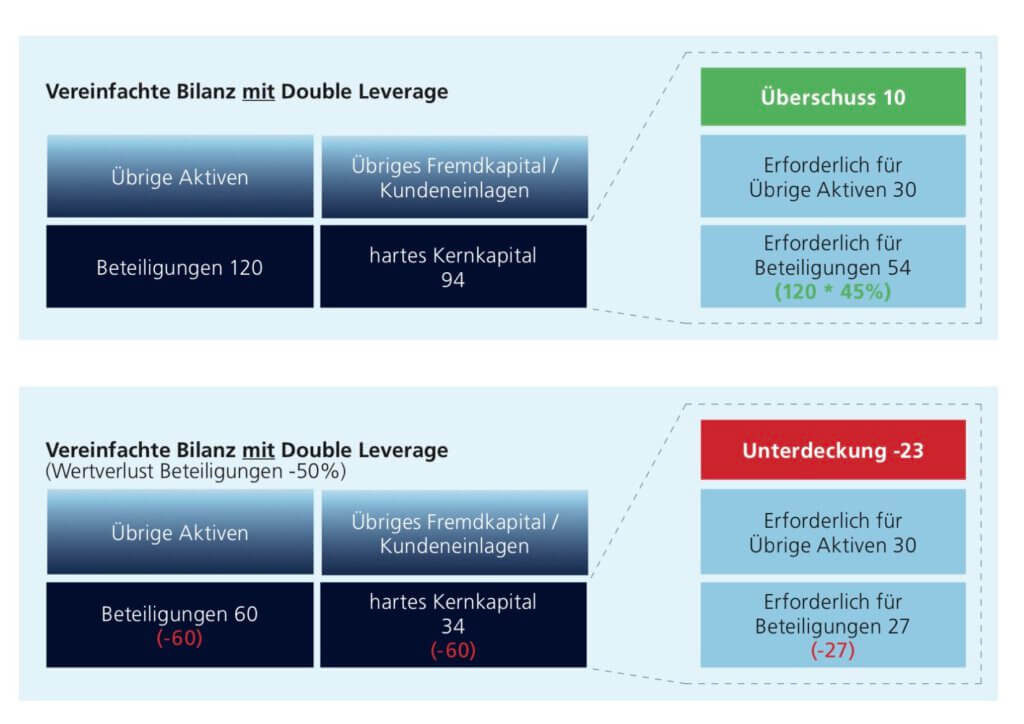
And here, too, the weaknesses surrounding the collapse of CS become clear. The Swiss regulator had allowed the crisis-stricken bank to maintain lower capital reserves for its foreign subsidiaries. This was a fact of which the general public was not even aware.
“This means that the parent company’s capital can also deplete very rapidly if business performance at foreign subsidiaries deteriorates, if there are significant losses, a restructuring, or a crisis situation.”
FINMA had explained this obliquely in an information sheet on the necessity of UBS’s future capital increase.
Regulator Ignored Early Warning Signs
The Swiss Financial Market Supervisory Authority (FINMA) further explained that, at CS, the old regulatory framework had led to a decline in the parent company’s capital ratios and had significantly hindered efforts to stabilize the major bank.
It should be noted, however, that FINMA leaves open the question of when the authority learned of the billion-dollar write-down in the U.S.
In fact, the regulator should have noticed this problem as early as when Lehmann and Körner presented CS’s new corporate strategy.
According to its own statements, FINMA approved the merger of UBS and CS as early as three days before the actual liquidity crisis at CS began.
PUK Made a Mistake
At the press conference to present its final report, the Parliamentary Investigation Commission (PUK) responded to a question from muula.ch about why it had found nothing regarding CS’s U.S. activities in connection with the bank’s collapse, stating that the collapse of the major bank had nothing to do with foreign operations.
But now even the Swiss authorities are refuting this with their revised information on the foreign subsidiaries.
With their investigation, the parliamentarians essentially sought only to fend off accusations against Switzerland.
New Intermediate Holding Company
Thanks to statements by Finance Minister Keller-Sutter, the SNB, and FINMA, it is now becoming clear to the public in many quarters what the true cause of Credit Suisse’s collapse was.
The billion-dollar loss at the U.S. subsidiary, Credit Suisse Holdings (USA) Inc., as muula.ch has consistently reported.
Anyone who understands this also understands why, following the emergency merger, UBS’s first move was to transfer its profitable U.S. unit – along with the loss-making CS operations – into a new U.S. intermediate holding company.
Working Toward a Merger
Had Switzerland always laid out the truth about the collapse of CS, the public and policymakers would surely have immediately supported the new capital requirements for UBS.
Debt-financed foreign subsidiaries were CS’s weak point, not poor management or even a ‘bank run.’
The latter was merely a means to an end for the emergency merger of CS with UBS.
July 4, 2026/kut./ena.