
Payment systems regularly fail. But instead of developing a viable solution for emergencies, Switzerland is offering nothing more than nonsense.
Many people believe that Switzerland is at the forefront in terms of financial organization and technology.
Yet emergencies, such as the Swissair grounding or the catastrophic fire in Crans-Montana that claimed over three dozen lives, reveal a stark reality.
Limited to Essential Goods
A functioning electronic payment system in the retail sector is crucial for security of supply, the Federal Office for National Economic Supply (BWL) grandly announced this week.
Banks, payment service providers and retailers have agreed, under the leadership of the BWL and the Swiss National Bank (SNB), to voluntarily introduce offline card payments.
But when you look at the details, the nonsense becomes glaringly obvious.
In addition to cash as an important alternative to digital payment methods, the aim is to ensure that the public can purchase essential goods without cash even in the event of temporary outages in data or communication connections, the statement continued.
Delayed Data Retrieval
The mechanism worked as follows: the card reader (terminal) would store the transaction and transmit it as soon as the connection was restored after an emergency.
Only then would the transaction be processed and the card account debited, according to those involved.
This mechanism is comparable to payments made on an airplane, where transactions are not processed until after landing.
Chaos at the Checkout Counters
There’s hardly any need to describe the chaos that regularly ensues at retailers like Coop, Migros, and others when customers are unable to pay digitally – sometimes over a few hours.
Horror stories and reports of personal hostility at the registers constantly circulate in the media whenever retailers resort to accepting only cash – which customers, however, hardly ever hold in their wallets anymore.
Rejection Is Also Possible
Switzerland is now relying on a completely unusable system. In an emergency, only essential goods – such as food, medicine, and fuel – can be paid for.
However, it could also be the case that no payment at all is possible, explain Federal President Guy Parmelin, SNB President Martin Schlegel, and the Delegate for National Economic Supply, Roland Pfister, to a population that shrugs its shoulders at how the system works.
Many observers fail to understand why, in an emergency, people cannot simply continue shopping as usual.
The SNB could, after all, bear the risk that an account might ultimately be insufficiently funded on behalf of the country. In any case, we’re only talking about a few days in the event of a complex payment failure in the retail sector.
Limit on Transaction Amounts
Furthermore, the Swiss offline function is activated neither centrally nor by official order.
It kicks in automatically as soon as a payment terminal can no longer establish a connection to the payment provider, the Federal Departement for Economic Affairs explained.
So, if in the future you can’t pay for beer at the supermarket, it might be due to the offline payment function. Beer isn’t exactly a necessity, after all.
Offline payments are also limited in both number and amount. A family of four would likely have a harder time with this than Swiss singles.
Physical Card Required
But the biggest nonsense of all is the payment system itself. It is limited to physical debit and credit cards that require a PIN.
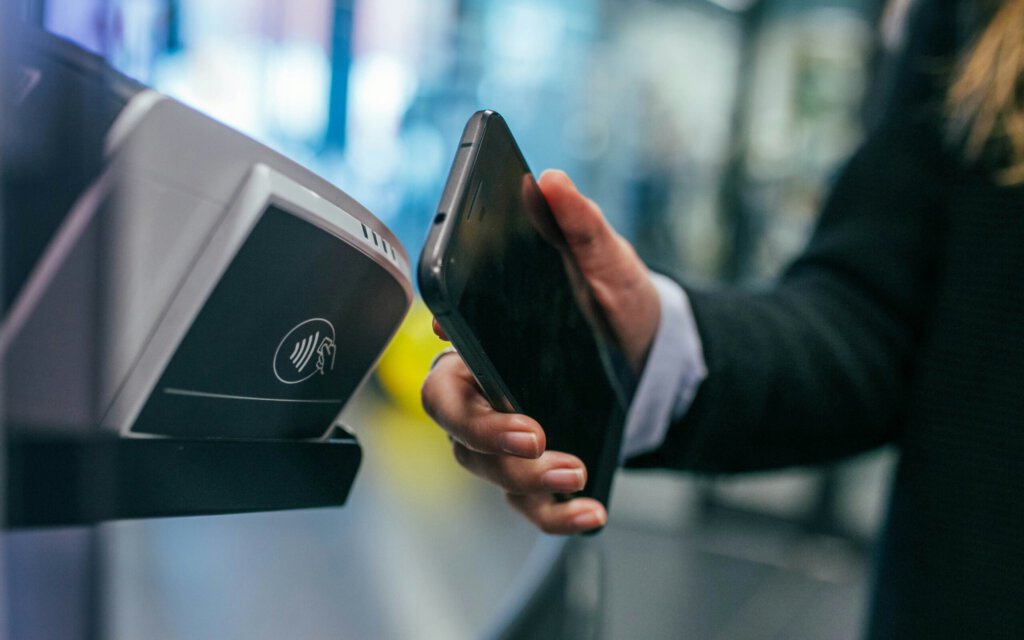
“Contactless payments and mobile payment methods, such as those using a cell phone or smartwatch, cannot be supported in offline mode,” they stated.
Yet that is exactly how most Swiss people now pay.
Payment apps have long since surpassed credit cards as a payment method, as shown by the SNB’s payment methods survey.
Foreigners Excluded
And those in charge are raising yet another big question mark.
The offline function is limited to domestic cards, as if foreigners in Switzerland wouldn’t need any food, medicine, or fuel in an emergency.
And Airlines don’t make any such distinctions either.
Words of Praise
“Switzerland is the first country in Central Europe with a broadly supported solution to strengthen the resilience of electronic payments,” herald SVP Federal Councilor Parmelin, SNB President Schlegel, and BWL delegate Pfister, all patting themselves on the back.
Anyone who believes that will have to wait until the next emergency strikes.
After all, if the payment systems of PostFinance, Twint, or the major bank UBS were to go down for just a few hours, chaos would undoubtedly ensue at Coop, Migros, and other retailers.
August 26, 2026/kut./ena.