
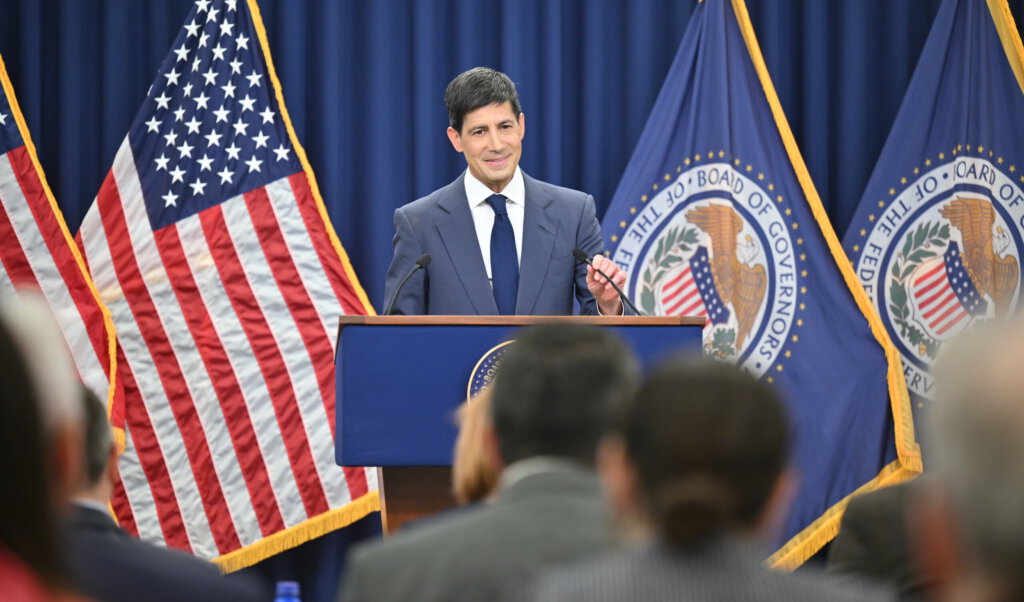
Kevin Warsh’s second interest rate decision as chairman of the Federal Reserve is giving inflation free rein. Swiss citizens need to be especially cautious.
The Federal Reserve has sent a clear warning to the world.
The Federal Open Market Committee left the target range for the federal funds rate unchanged at 3.5 to 3.75 percent, as the Fed announced on Wednesday evening.
Strategy Remains a Mystery
In doing so, the new Fed Chair Kevin Warsh – who appeared before the global public for the second time since his appointment by U.S. President Donald Trump – once again failed to address high inflation.
He does, however, repeatedly emphasize his determination to combat inflation in the U.S., which has risen significantly over the past five years.
But how? More and more economists are puzzling over this, because ultimately, only interest rate hikes can help.
Playing for Time
Three of the nine members of the Federal Open Market Committee also advocated for precisely this step, as the Fed announced in its statement.
They wanted a 25-basis-point rate hike. This would have been a clear signal of the seriousness of the fight against rising prices.
The new powerhouse at the U.S. central bank made it clear to the media that he could not bring inflation – which has not fallen below the 2 percent target for years – down within 45 days.
Economists know, however, that inflation shoots up like a rocket but falls only slowly, like a feather.
Support for Trump
The Fed now expects an inflation rate of 3.6 percent for 2026, which is significantly above that 2 percent target.
Warsh had repeatedly emphasized that his actual goal was to guarantee price stability.
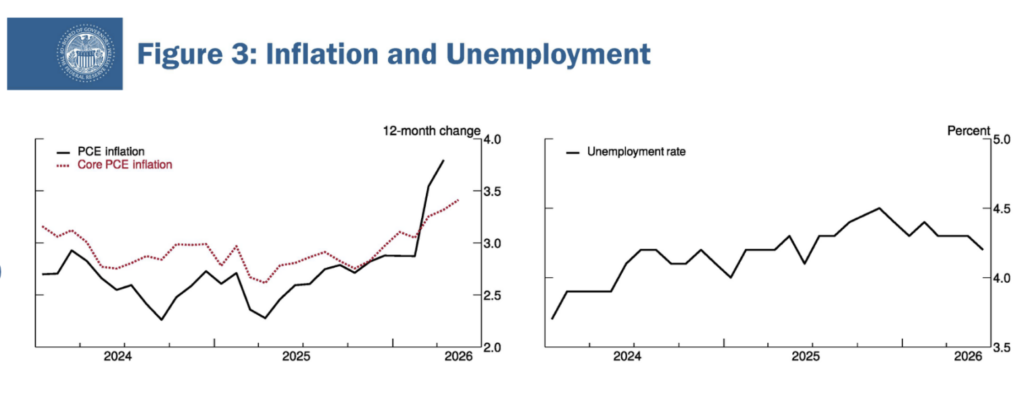
However, the second consecutive decision not to raise rates suggests that the Fed is more interested in supporting U.S. President Trump and avoiding any disruption to the U.S. economic boom.
In addition, this allows the U.S. to secure financing on more favorable terms.
Energy prices skyrocketing
Meanwhile, the Fed’s second goal – high employment – has been virtually fully achieved, the Fed itself announced a few days ago.
This makes it particularly clear that there was actually no reason to postpone another interest rate hike.
With the U.S.-Israeli war of aggression against Iran and the resulting blockade of the Strait of Hormuz, energy prices are rising in many places.
But an interest rate hike is not a remedy for this, it was stated succinctly.
Rising Swiss Franc
For Switzerland, this is a clear warning sign. Anyone investing in the U.S. must expect sustained high inflation to erode the value of their investment.
For Swiss exporters, this means converting their U.S. revenue into Swiss francs as quickly as possible and not investing it in the U.S. – for example, in government bonds.
However, this increased demand leads to a further appreciation of the Swiss franc, which the Swiss National Bank (SNB) must then counteract.
The Swiss central bank then prints money and buys U.S. assets to cause the franc’s exchange rate against the dollar to fall again.
SNB Profits Decline
The logic is as follows: If companies and individuals do not want to invest in the U.S., the trade surplus must be recorded elsewhere on their books.
In Switzerland’s case, that entity is the SNB.
The SNB then also bears the risk of exorbitantly high inflation in the U.S.
Ultimately, however, this devaluation of U.S. assets ends up back with the Swiss people anyway, in the form of lost SNB profits.
The country must therefore be careful that the Americans do not expropriate the Swiss through hyperinflation.
July 29, 2026/kut./ena.