

Hurricane Melissa caused devastation in 2025. But this is all small fry, as the insurance industry and stock markets now reveal.
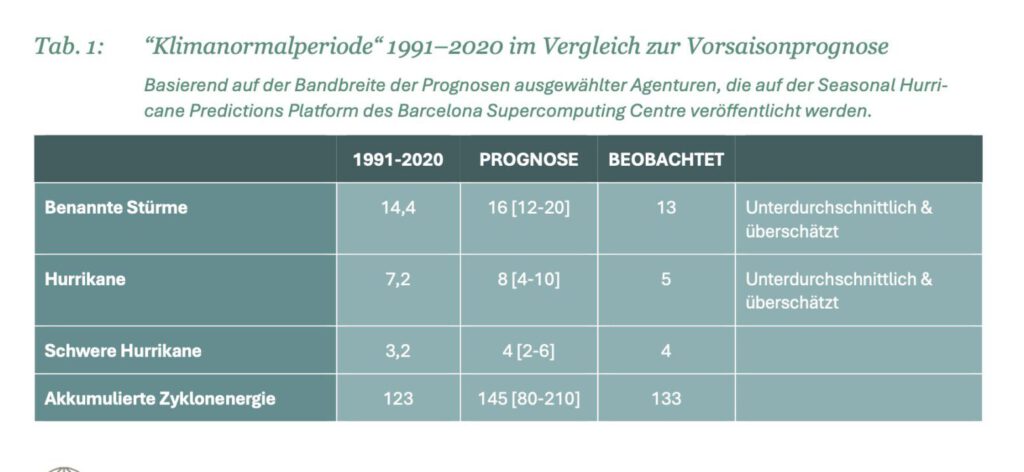
The 2025 Atlantic hurricane season was intense in meteorological terms.
After all, there were three category-5 hurricanes, and the record-breaking Hurricane Melissa caused severe devastation in Cuba and Jamaica.
Low insurance density
However, insured losses from the 13 named storms remained below average this year.
Reinsurer Munich Re estimated this year’s total losses at only 22 billion dollars, which is just one-fifth of the ten-year average.
Only between 3 and 5 billion dollars was actually insured.
“Melissa” was a latecomer
Major damage usually occurs on the east coast of the US and in Japan.
But this year, there was not a single landfall in the US. Furthermore, 2025 was the first season since 2015 in which no hurricane hit the US mainland and the typhoon season in Japan was also quiet.
Sahara dust prevented rapid warming, and tropical storm “Andrea” was the first storm to form on June 23, marking the latest start to the season since 2014.
Even “Melissa,” which ended the season, was the latest first storm in the Caribbean Sea since 1997.
Stocking up reserves
However, MunichRe said it was a coincidence.
Nevertheless, the stock markets are praising reinsurers to the skies, because years of damage such as those when Rita, Wilma, and Katrina caused devastating damage worth billions in the US are the benchmark.
Swiss reinsurer Swiss Re is also seeing booming profits – and its share price is skyrocketing.
Management seized upon the opportunity and even increased reserves once again, as reported by muula.ch.
Positive returns for years
Zurich-based asset manager Twelve Securis (formerly Twelve Capital) which specializes in insurance risks, also praised the developments.
The combination of high natural hazard activity and low insurance claims has once again demonstrated the resilience and diversification benefits of the natural catastrophe bond asset class, the experts explained.
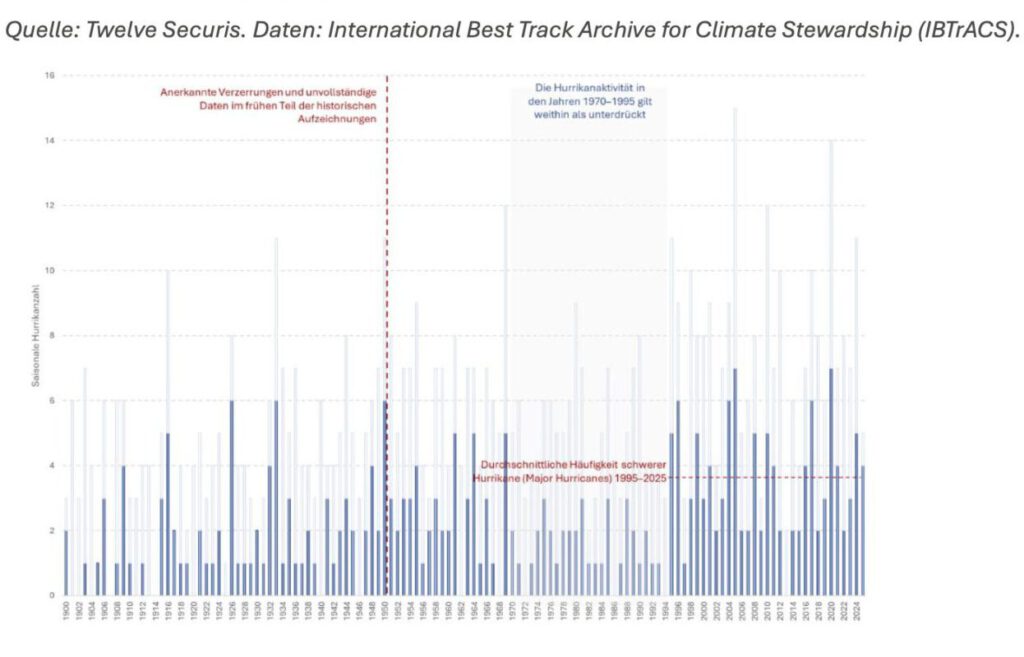
Against the backdrop of record volumes of cat bond issuances, narrowing spreads, and constructive investor demand, the sector started 2026 from a position of strength.
The asset class has achieved consistent positive returns for the third year in a row, supported by disciplined underwriting and a favorable claims environment.
Wind of change
Hurricanes are caused by high sea temperatures, as a water temperature of around 27 degrees Celsius is a prerequisite for the formation of a tropical cyclone.
The earlier this temperature is reached during the year, the sooner storms will form.
However, if global warming leads to permanently higher temperatures, hurricanes, typhoons, cyclones, and other extreme weather events are likely to become more common, warn insurance managers.
At some point, the capital markets will probably realize this too.
But for that to happen, investors will probably have to pay for their lesson, enduring losses first.
December 2nd, 2025/kut./ena.