

A long-term study of the private bank Pictet shows that investing in Swiss stocks always pays off. But, investors need to keep two things in mind.
Swiss stocks have recovered significantly over the past three years and have returned to their long-term trend of positive returns.
Stocks outperform bonds
With a total return of 17.8 percent in Swiss francs and as much as 34.7 percent in U.S. dollars, Swiss stocks outperformed many global benchmarks in 2025.
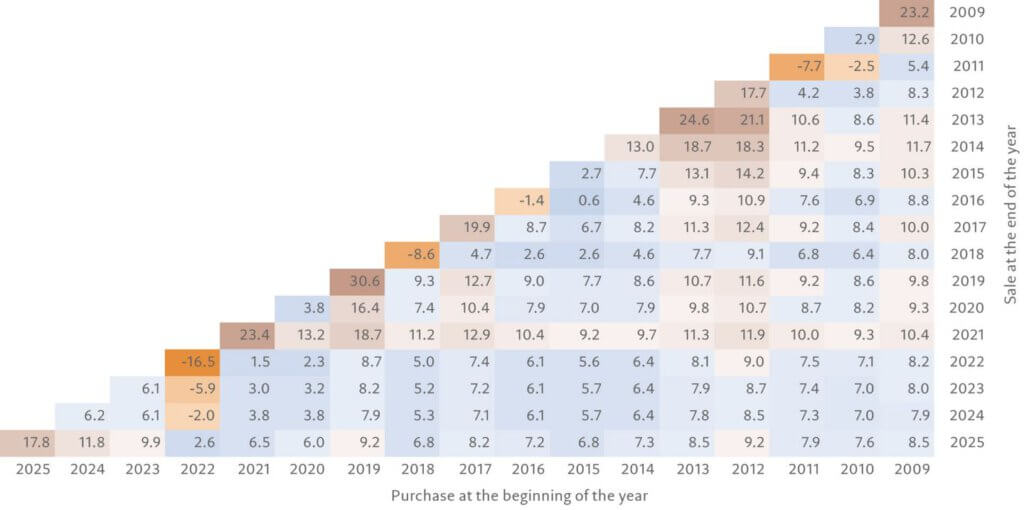
Since 1900, the average nominal annual return on Swiss equities has thus been 6.8 percent, compared with 3.9 percent for Swiss government bonds, according to calculations presented this week by the Geneva-based private bank Pictet in a new long-term study.
Recessions have little impact
If investors adopted a 10-year time horizon, an investment in Swiss equities made in 1931 or later never generated any loss, the study added.
The same applies to an investment made in 1909 and held for a period of 14 years.
Investors who have held their stocks for over a decade have never lost money, even during the worst crises.
This holds true from World War I and World War II through the Great Depression of the 1930s, the oil crisis, the dot-com bubble, the 2008 global financial crisis, the euro crisis, and all the way to the coronavirus pandemic.
Avoid panic selling
Especially in times when wars once again hold the world in check, investors must remind themselves of these principles.
For long-term investors, there is no alternative to equity investments, warned the wealth management experts at the Geneva-based private bank for the ultra-wealthy.
The study makes it clear that patience and discipline have proven to be two key traits – even during the most turbulent times of the 20th and 21st centuries.
The problem for investors during panic selling is that they miss the opportunity to re-enter the market.
According to numerous studies, it is better not to sell during crisis situations.
Returns often between 6 and 9 percent
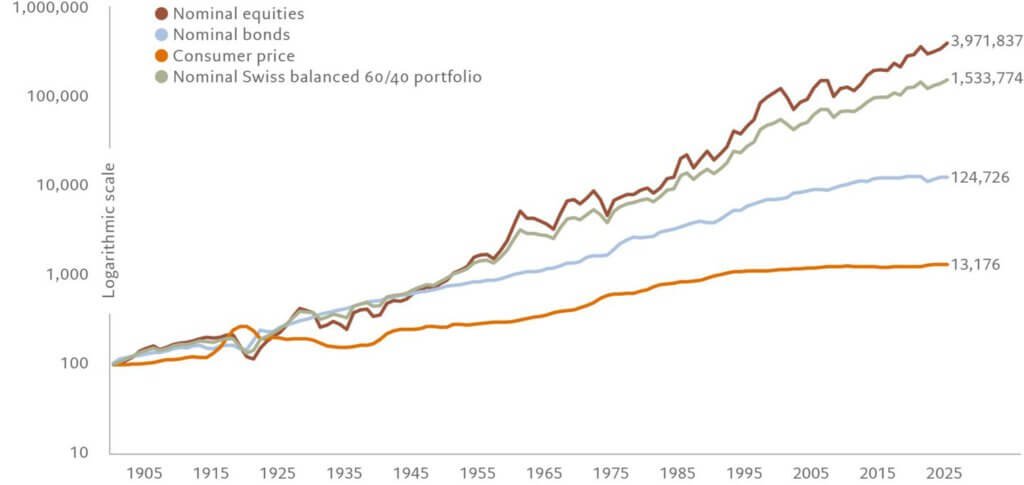
So, for example, someone who had invested about 1,000 Swiss francs in Swiss stocks in 1900 could look forward to nearly 4 million Swiss francs by the end of 2025 – that is after 126 years – according to Pictet’s calculations, which did not include any fees or rebalancing costs.
With Swiss bonds, on the other hand, that 1,000-franc investment would have yielded only 1.25 million Swiss francs, significantly less than with pure equity investments.
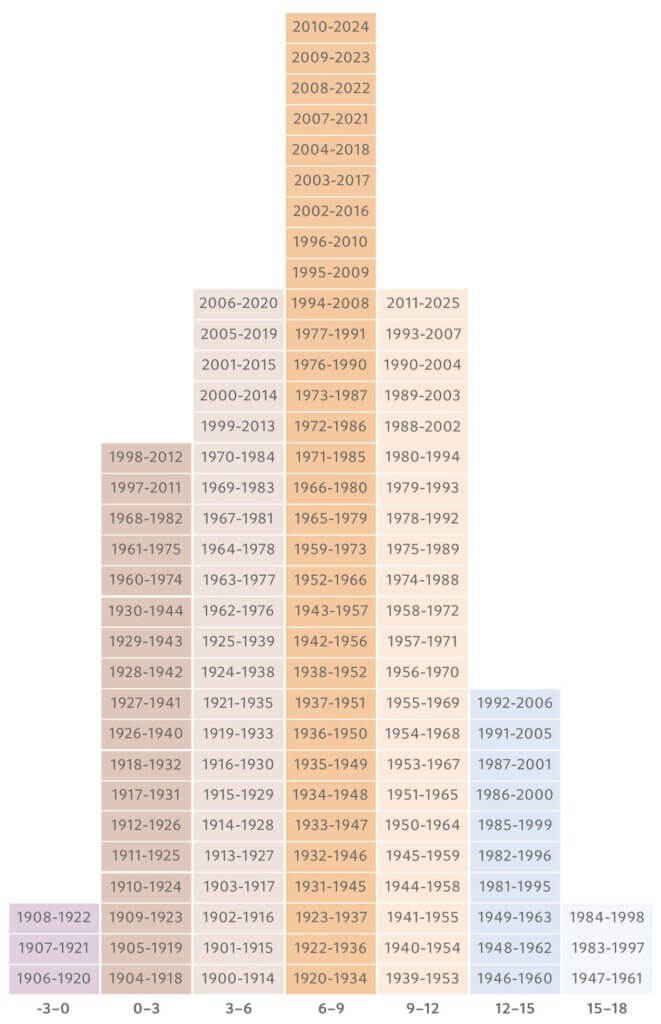
However, with a balanced portfolio consisting of 60 percent Swiss equities and 40 percent Swiss bonds, even relatively risk-averse investors would have achieved a solid annualized nominal return of 6 percent since 1900.
An investment made in 1912 or later with a 10-year holding period would have consistently generated positive returns, and with significantly lower volatility than a pure equity portfolio (12 percent versus 19 percent).
Swiss equities are virtually always top performers, even when there is occasional turbulence.
March 5, 2026/kut./ena.