The attack by Israel and the US on the Islamic Republic of Iran poses many dangers for the world. US President Donald Trump has the most to fear.
The Iranians have been duped by the Americans and Israelis for the second time in negotiations over their nuclear program.
Son becomes religious leader
A transmission of information from Muscat in Oman and then also from Geneva to the supreme leader of the Islamic Republic of Iran, Ayatollah Khamenei, revealed his whereabouts, enabling Israel and the US to eliminate him.
But what follows after the martyrdom of the Iranian leader?
At present, everything points to his 56-year-old son, Mojtaba Hosseini Khamenei, following in the footsteps of the Islamic Revolution and continuing the fight against Iran’s enemies.
Khamenei was right
This would immediately render plans to install a US puppet, such as the son of the last Shah of Persia, Reza Pahlavi, as the new leader of Iran, null and void.
However, the entire country, with its 90 million inhabitants, could also descend into regional conflicts and become more of a threat to the entire Middle East.
Enormous resistance to the attackers from the West is currently forming.
After the death of their long-standing Ayatollah, quite a few Iranians are now thinking: for decades, he preached the truth with his warnings about the ambitions of Israel and the US.
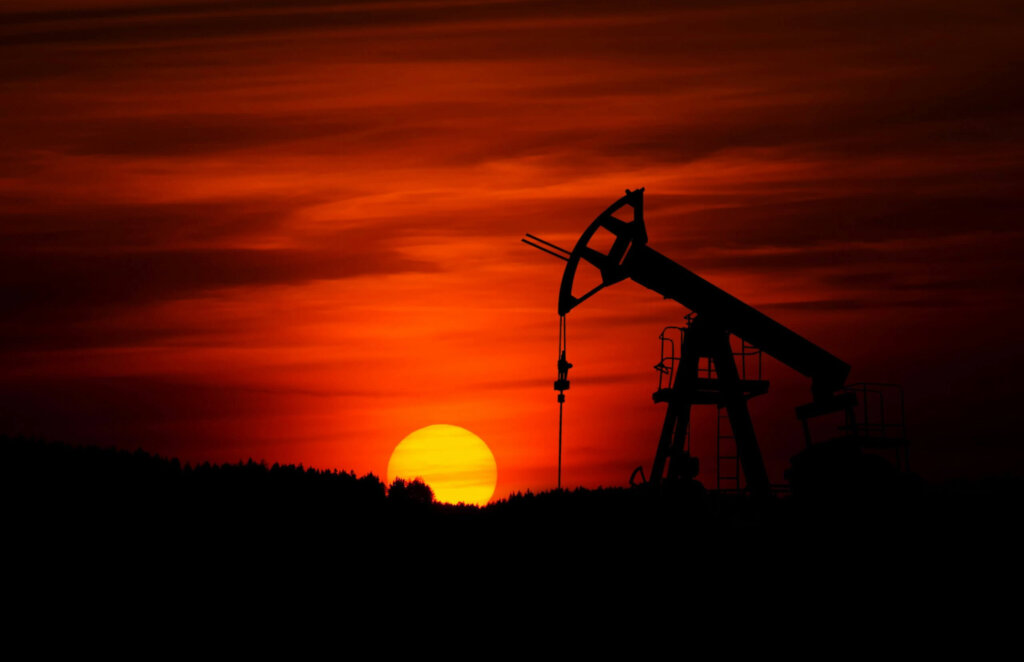
Oil prices explode
One thing is already clear with the Israeli and American attack on Iran: the world will never be the same again.
This does not even mean that Dubai, Doha, and Abu Dhabi will no longer be attractive tourist destinations in the future due to the missile and combat drone strikes.
As of Monday, the stock markets are likely to reveal the dangers for the world and the global economy. If the price of oil goes through the roof, the world could slide into a global recession.
The Strait of Hormuz, the bottleneck for world trade, is currently blocked by the Iranians. This means that India, China, and Japan can no longer obtain a large part of their oil supplies.
According to estimates, China receives around 17 million barrels per day via this route – if it is blocked, pipelines from Russia or Central Asia can hardly make up for the shortfall.
Transport costs rise
In addition to the loss of oil supplies, a blockade of the Strait of Hormuz, which the Iranians have announced in the event of an attack, will also affect the global trade of other goods.
The detours that transport ships now have to take are not only causing delays in logistics chains, but also leading to dramatic price increases for such transport.
Midterm elections approaching
In addition to higher oil prices, this is making many goods transported from Asia to Europe or America more expensive. This is likely to lead to a rise in inflation in many places.
US President Donald Trump has the most to fear from an increase in inflation because Americans are heavily dependent upon oil.
Simply extracting more ‘black gold’ in Saudi Arabia is of no use if there are no means of transport.
The midterm elections in November will be a nail-biting affair for Trump. Most Americans don’t care about Iran – but they do care about food and gasoline prices.
In this respect, the US could try to intervene in the oil market.
Switzerland’s monetary policy fails
The Swiss are in the fortunate position that their franc rises with virtually every crisis. This means that price explosions on the world market do not ultimately have such a significant impact on its inflation rate due to the strong Swiss franc.
However, if the whole world slips into recession, Switzerland’s export-oriented economy will have little to smile about.
The reality then looks bleak: less demand from abroad, plus an expensive national currency and a national bank that can no longer stimulate the economy by lowering interest rates because its key interest rate is already at zero percent.
Switzerland buys US government bonds
In contrast to Switzerland, however, the US Federal Reserve Bank (Fed) still has plenty of room for maneuver.
Unfortunately, Switzerland can only weaken its own currency by having the Swiss National Bank (SNB) buy dollar assets en-masse.
Trump would be pleased with this because it would create high demand for his US Treasuries.
Reluctance to buy among individuals
And if the stock markets collapse due to all of those risks, because the profit growth of global companies is faltering with the escalation of the Iran conflict, Switzerland will have to wrap up even warmer.
Savings in AHV, 2nd pillar, etc. and in deposits will then yield less.
And private consumption, a mainstay of the economy, will then automatically take a nose dive.
March, 1st, 2026/kut./ena.