

The Federal Statistical Office is adjusting the way it calculates inflation in Switzerland. This will enable the country to escape from unpopular deflation.
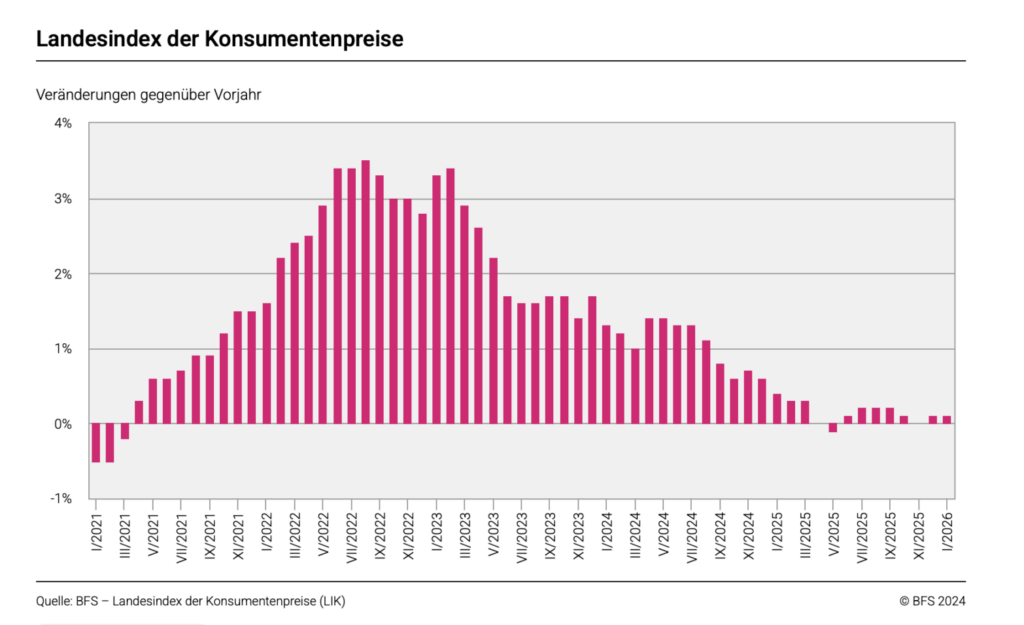
Switzerland is currently in the comfortable position of having no inflation.
This is measured by the National Index of Consumer Prices (LIK), which statisticians like to tweak in order to achieve politically desirable results.
Fishy accounting
The changes to the LIK are “historic,” the Federal Statistical Office (FSO) announced today, Friday.
However, anyone looking at the results will see something unusual rather than something historic.
For example, statisticians will now list seafood separately.
The FSO has included milk substitutes such as oats and other products as new goods, as well as the price of electricity at public charging stations, because they have become part of everyday life in Switzerland.
Arbitrary changes in proportions
The biggest change, and thus the most important move, is the inclusion of long-term care in the LIK price index.
To this end, the housing category has been significantly reduced, which means that rent reductions, which are currently pending in many places due to lower mortgage interest rates, will have less of an impact.
Statisticians are also simply raising the share of alcohol in their basket of goods, even though alcohol consumption is declining in this country.
The FSO is reducing the share of “leisure, sports, and culture,” even though Swiss people are increasingly working part-time and demand for these goods is actually growing.
However, prices for gym memberships, movie tickets, etc. are falling, which is why they are probably disruptive in the basket of goods.
It is clear that the FSO is consistently reducing everything that leads to falling price levels.
Negative interest rates avoided
The shares of domestic and imported goods also remain constant at 77.8 percent and 22.2 percent, respectively.
However, with the high Swiss franc, the Swiss consume much more goods and services from abroad or abroad.
Statisticians completely ignore this. The statistics simply ignore the import of even more “price reductions” from abroad.
Overall, the FSO’s realities are completely absurd.
But they help to ensure that Switzerland does not officially fall into the deflation trap and that the Swiss National Bank (SNB) does not have to bring key interest rates back into negative territory, at least for the time being.
Health insurance premiums left out
However, statisticians believe that their new figures provide a better picture of the situation than before, according to a media conference.
But the FSO’s reasons for the adjustments were so absurd in some cases that expert journalists could simply not stop laughing.
For example, regarding the higher proportion of alcohol, they simply stated that the value had probably been ‘a little too low’ in the past.
The FSO also wants to continue to exclude basic insurance premiums, which place an exorbitant burden on the population, from inflation calculations because they do not correspond to consumption but are more like a tax.
However, this argument fizzles out when it comes to alcohol taxes.
Mistrust is justified
A member of the media wanted to know how high inflation had been last year under the new system.
The FSO replied that it did not have that figure, even though the authority stated in the very same breath that the index values were available retroactively back to 1980.
More and more Swiss people distrust the official inflation statistics because they do not reflect reality.
These are not deviations from average observations, as the FSO arrogantly dismisses, but rather the statisticians are not serving up the truth, but serve other purposes.
Rent shenanigans
For example, more and more Swiss people are moving to cities, which are significantly more expensive than living in the countryside.
As a result, rent should actually account for a much larger share of household budgets, because new housing in the city is more expensive than in the countryside and does not benefit from lower existing rents.
However, from January 2026, the FSO has reduced the share of rent in the basket of goods to a low 18.9 percent.
But what small family in Zurich, Basel, Geneva, or Bern can find an apartment for 18.9 percent of their salary on the Swiss median full-time wage of 7,000 Swiss francs?
That would be 1,323 Swiss francs in monthly rent, so the answer to the question is: probably no one.
No need for action until inflation hits
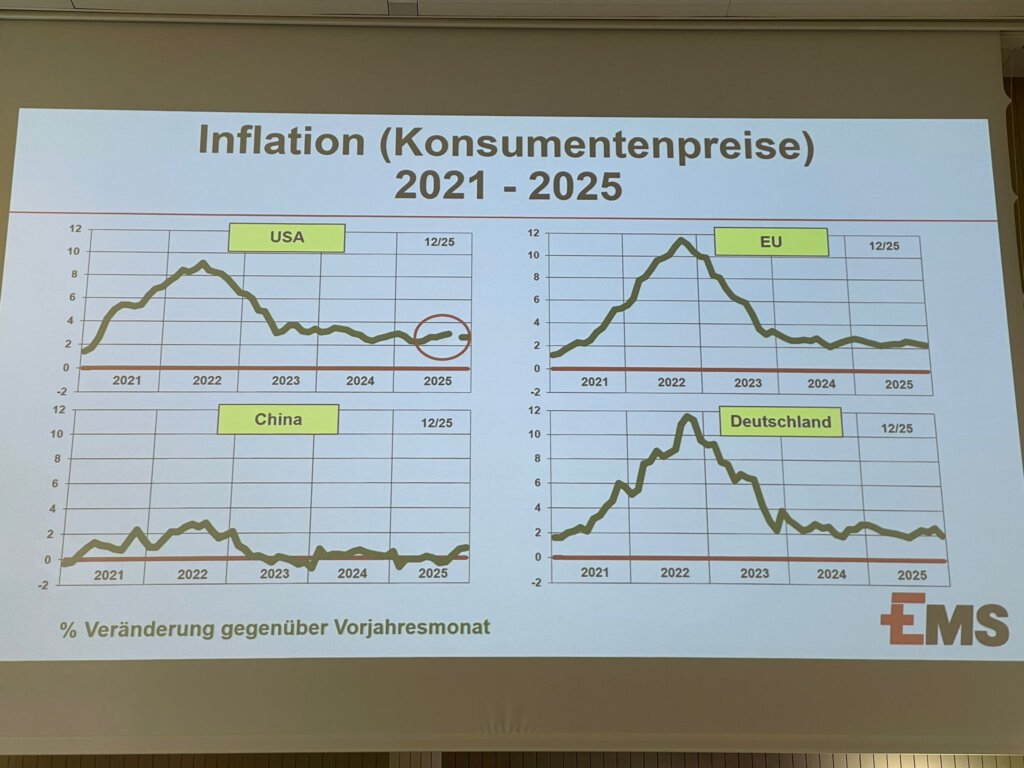
By including increasingly expensive long-term care in the index, statisticians have cleverly helped ensure that Switzerland does not remain in a deflationary phase for long, as Japan and China have.
Long-term care is likely to become increasingly expensive in the foreseeable future and, with the proportion of older people in the population rising, demand for it is also likely to increase in the FSO’s basket of goods.
And if inflation hits harder than Switzerland would like in the future, the FSO can just make further adjustments to the LIK. Easy.
These will then also be relegated to “historic” once again.
February 13, 2026/kut./ena.